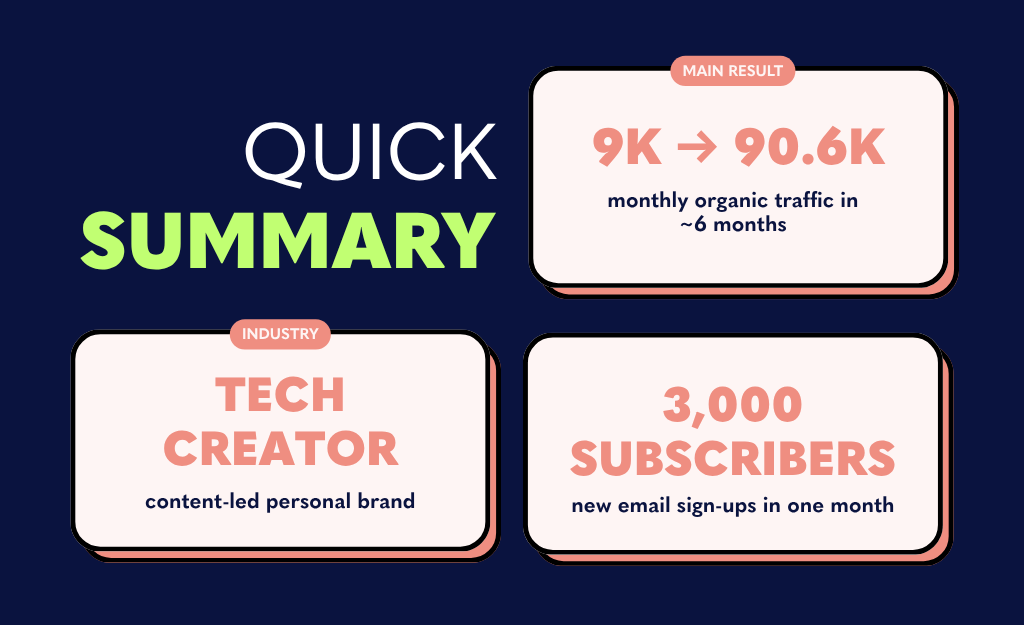
You can publish consistently for months, even years, and still see little movement in organic traffic. Here’s how we transformed Pete Matheson’s blog into a channel that delivered over 90,000+ monthly visits.
As a tech YouTuber and content creator, Pete Matheson was doing (almost) everything right. He was publishing genuinely useful, high-quality content across his channels, he’d built a decent following of 300K+ subscribers on YouTube, and he was actively investing in his own website and blog.
On the surface, it seemed like the fundamentals were in place.
But… (and it’s a tale as old as time), his website still wasn’t getting good visibility on Google.
The blog was bringing in some traffic, but it just wasn’t ranking for the topics he wanted to be known for. New content was being created and published regularly, yet very little of it was actually gaining traction in search. Annoying, right?
This is actually something we see all the time at Empowered English. Creators and founders work tirelessly to publish content consistently, but they’re never really rewarded for that effort by Google.
The issue? It’s definitely not the effort or the quality of the content; it's the strategy that supports it.
So when Pete approached us looking for a way to turn his blog into a consistent source of organic traffic, we got stuck in! Here’s a closer look at what we were up against and how we helped Pete get the search visibility he deserves.
The Challenge: A Strong Brand Without a Search Strategy
Pete Matheson already had what many websites lack: a steady stream of content and a growing audience on his YouTube channel.
His blog wasactive and regularly updated. But it wasn’t built around a structured SEO strategy.
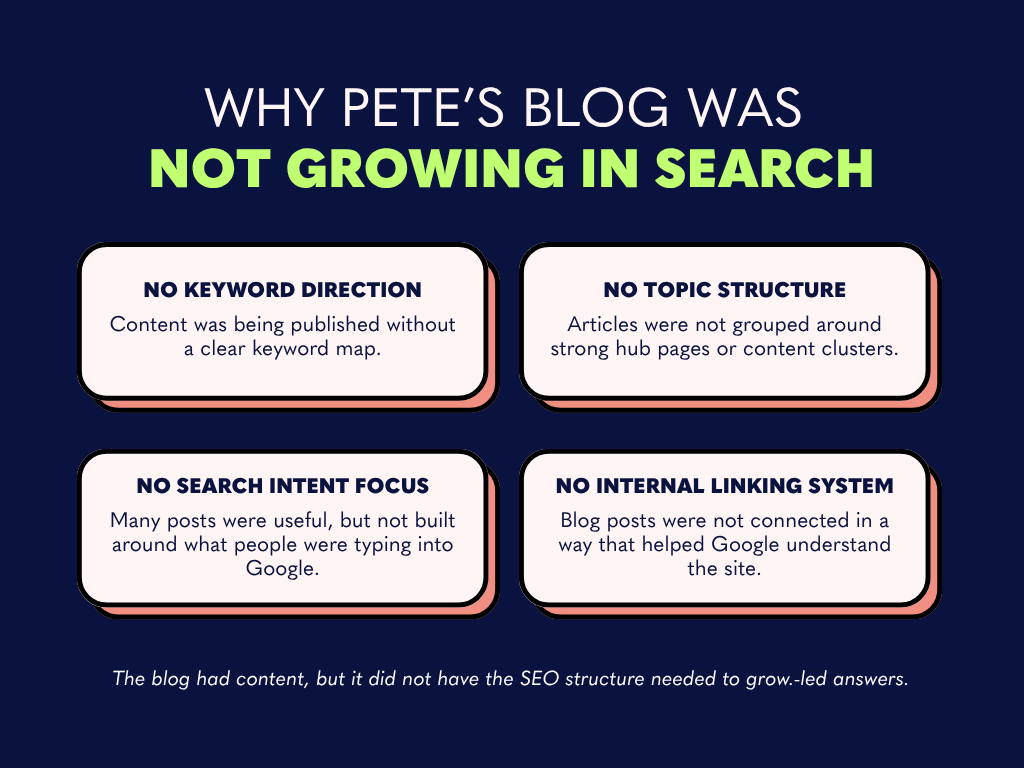
Most of the articles were opinion pieces, creator updates, or just YouTube transcripts repackaged with AI. And while this content was valuable to his existing audience, these posts weren’t really designed to capture search traffic. They didn’t target specific keywords, and they weren’t built around search intent.
As a result, the site had limited visibility in Google, receiving around 9,000 monthly organic visits. Even more concerning, the site wasn’t ranking for many of the topics Pete actually wanted to be known for.
During our initial content audit, we discovered the core issue wasn’t the usual suspects of authority or brand recognition. Pete already had both.
Instead, the problem was structural. There was no keyword map guiding the content, no hub pages to anchor key topics, no clusters to build topical authority, and no internal linking system connecting content into a cohesive SEO architecture.
In short, the blog was publishing content without a search strategy. Which is a recipe for slow, inconsistent growth and missed traffic opportunities.
The Solution: Building a Structured Growth System
After the content audit, we then set out to rebuild the blog’s organic growth strategy from the ground up, with our primary goal being to transform the blog into its own structured search engine.
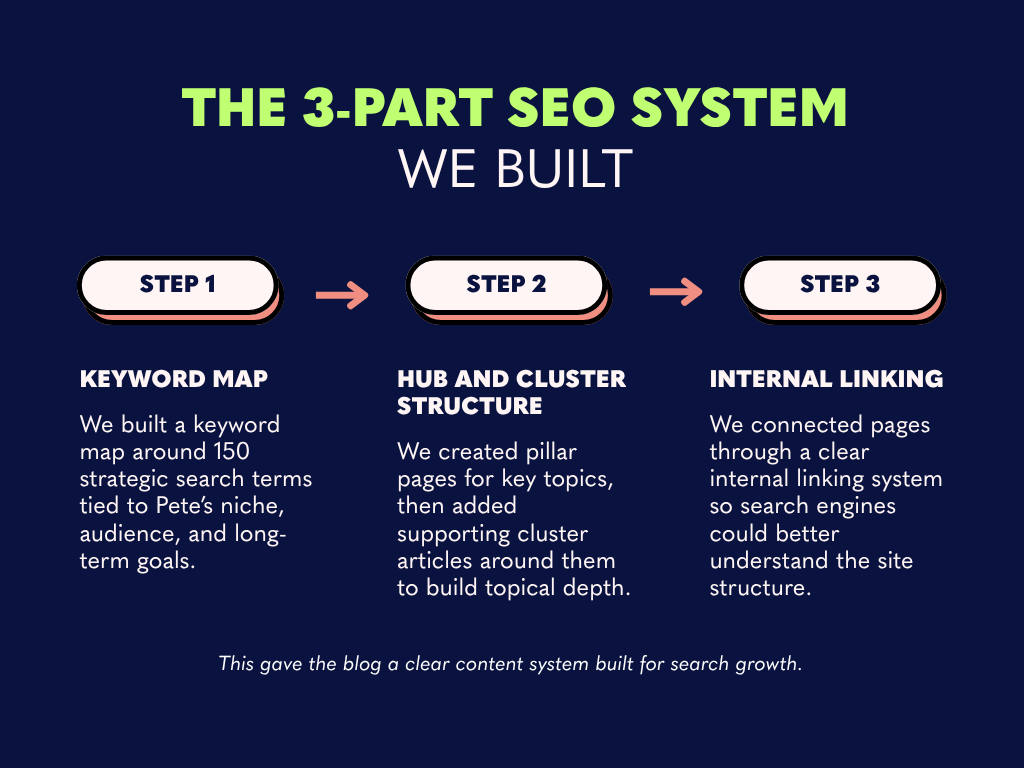
Here’s what we did, step-by-step.
Step 1 - Building a Clear Keyword Map
The first step was building a comprehensive keyword map targeting approximately 150 strategic keywords aligned with Pete’s niche, audience, and long-term positioning.
We focused our efforts on identifying topics that reflected real search demand and mapped closely to Pete’s expertise. This allowed us to prioritise opportunities where he could realistically compete and add value.
Step 2 - Creating Topic Authority with Hub and Cluster Architecture
From there, the content strategy was redesigned around a hub-and-cluster structure.
Key topics were developed into pillar hub pages that could serve as authoritative resources within the niche. Around those hubs, supporting articles were then created to form content clusters, each targeting related search queries.
This structure allowed the site to demonstrate topical depth while capturing traffic from multiple keyword variations.
Step 3 - Strengthening the Site with Internal Linking
We also implemented a strategic internal linking framework, making sure that new articles strengthened the authority of pillar pages and helped search engines understand the site’s content hierarchy.
This is ultimately what enabled the website to become an interconnected ecosystem of content.
The Implementation: Connecting the Dots and Building Momentum
Once the strategy was mapped out, the next phase focused on execution.
New pillar pages were created to anchor the most important topics Pete wanted to rank for. These pages served as comprehensive resources that could compete for higher-value search terms.
Supporting those hubs, cluster articles were developed to answer more specific questions within each topic area. These pieces targeted long-tail keywords while strengthening the authority of the main pillar page through internal linking.
At the same time, the existing blog content was reorganized and strategically connected into the new structure.
As the site architecture improved, search engines began to better understand the relationships between topics across the site.
Within a few months, rankings started to climb.
Pages began appearing for new keywords. Traffic increased steadily as clusters gained momentum. And the site’s topical authority expanded across multiple related search queries.
What had previously been a collection of disconnected articles was now functioning as a structured SEO growth engine.
The Results: Measurable Growth Across Traffic, Rankings, and Subscribers
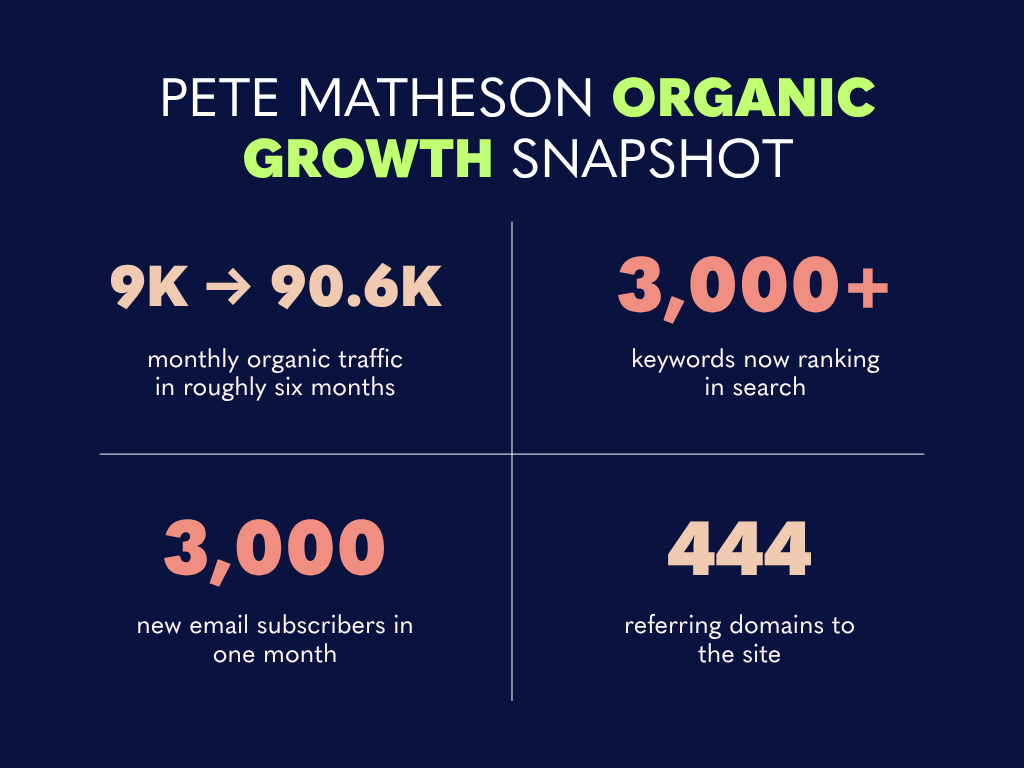
The impact of the new strategy became visible within months.
Here are the two main SEO highlights:
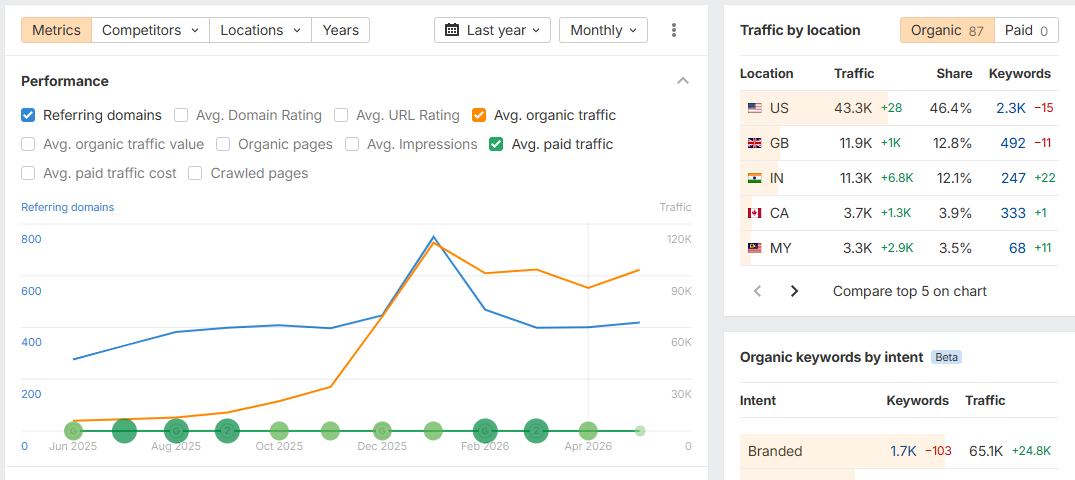
Organic traffic grew from 9,000 monthly visits to 90,600, representing a 10X increase in organic traffic in roughly six months.
The site also saw dramatic growth in keyword visibility, with Pete’s blog now ranking for 3,000+ keywords, many of which target valuable topics within his niche.
At the same time, the site’s authority began strengthening naturally as other websites, creators, and AI experiences started linking to the content.
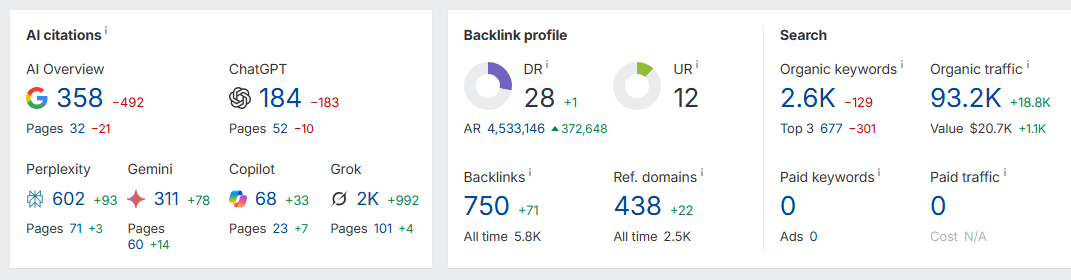
Today, the blog has 444 referring domains, and organic search has become a consistent source of new visitors.
Traffic is also geographically diverse, with 46% of visitors coming from the United States, expanding Pete’s global audience.
Perhaps most importantly, the blog now feeds directly into Pete’s broader marketing ecosystem.
In one month alone, the site generated 3,000 new email subscribers, demonstrating that the traffic being captured isn’t just larger in volume. It’s also highly relevant to Pete’s audience and business.
Beyond the numbers, the qualitative benefits have been just as important. The blog now operates as a predictable growth channel for both affiliate links and ad revenue, content aligns with search intent, and the site naturally attracts backlinks from other creators within the industry.
Ready to Transform Your Content Into a Growth Channel, Too?
If you’re sick of spinning your wheels and publishing endless pages of content without seeing any meaningful organic growth, the issue may not be the quality of your content, but the strategy behind it.
At Empowered English, we help creators, SaaS companies, and founders build structured content engines that turn blogs into scalable growth channels.
Want to pick our brains about why your content strategy might not be working? Book a free call with us today (and get 10% off your first invoice when you quote BLOG). Your content deserves better results!