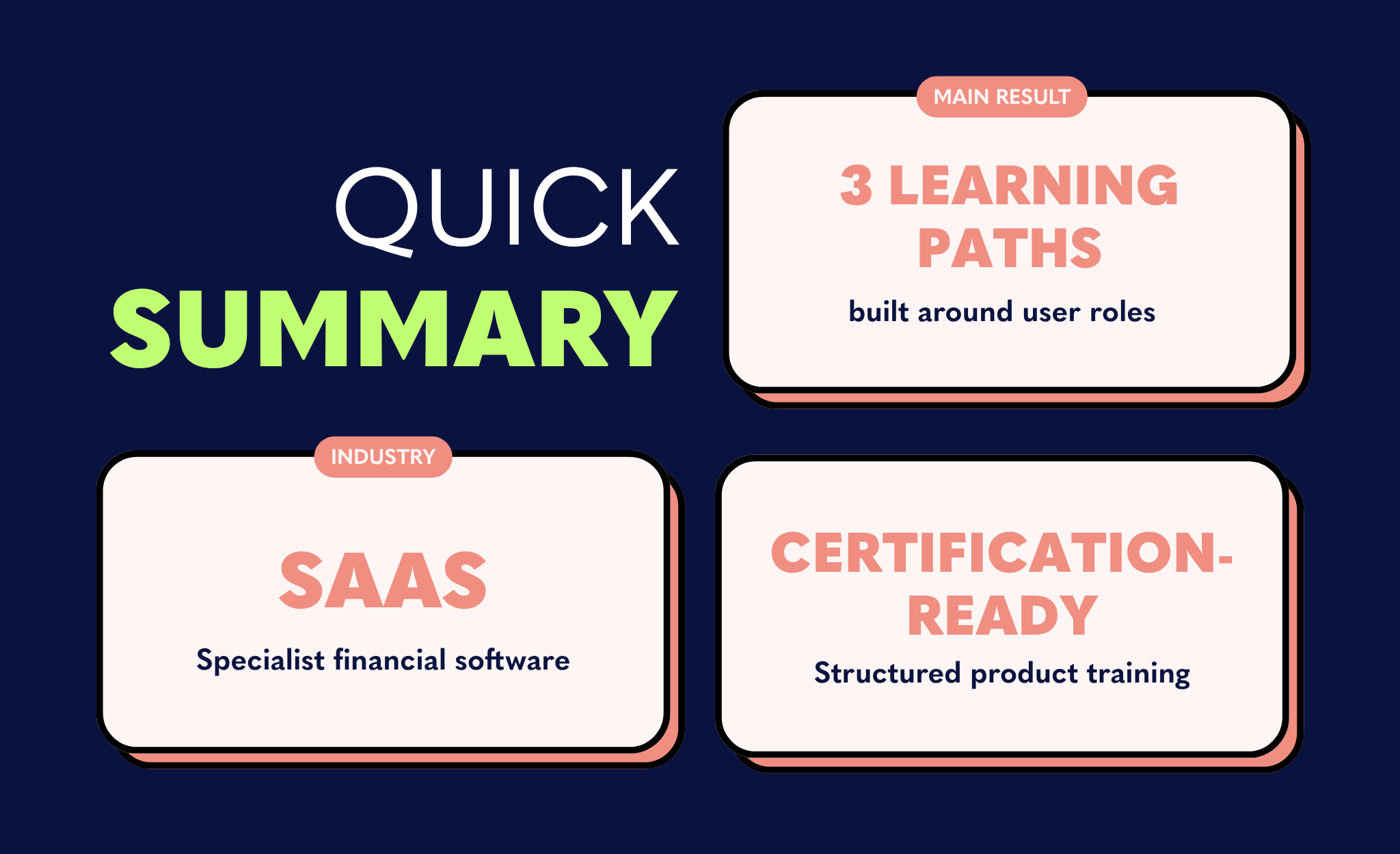
New SaaS customers often need guidance before they can confidently use a product.
For Dynamo, that education around its Psicle platform relied heavily on account managers. As the software developed, the team needed a structured training system that could give different types of users the guidance relevant to their role.
We led the instructional design and content development for Psicle Academy, creating certification-ready course content and shaping a wider learning experience around the product.
The result is a role-based academy with three distinct learning paths, supported by interactive activities, product walkthroughs, animation, and practical course content.
Dynamo described the academy as “a breath of fresh air,” while one senior actuary commented that “actuaries have been desperate for colour.”
The Problem
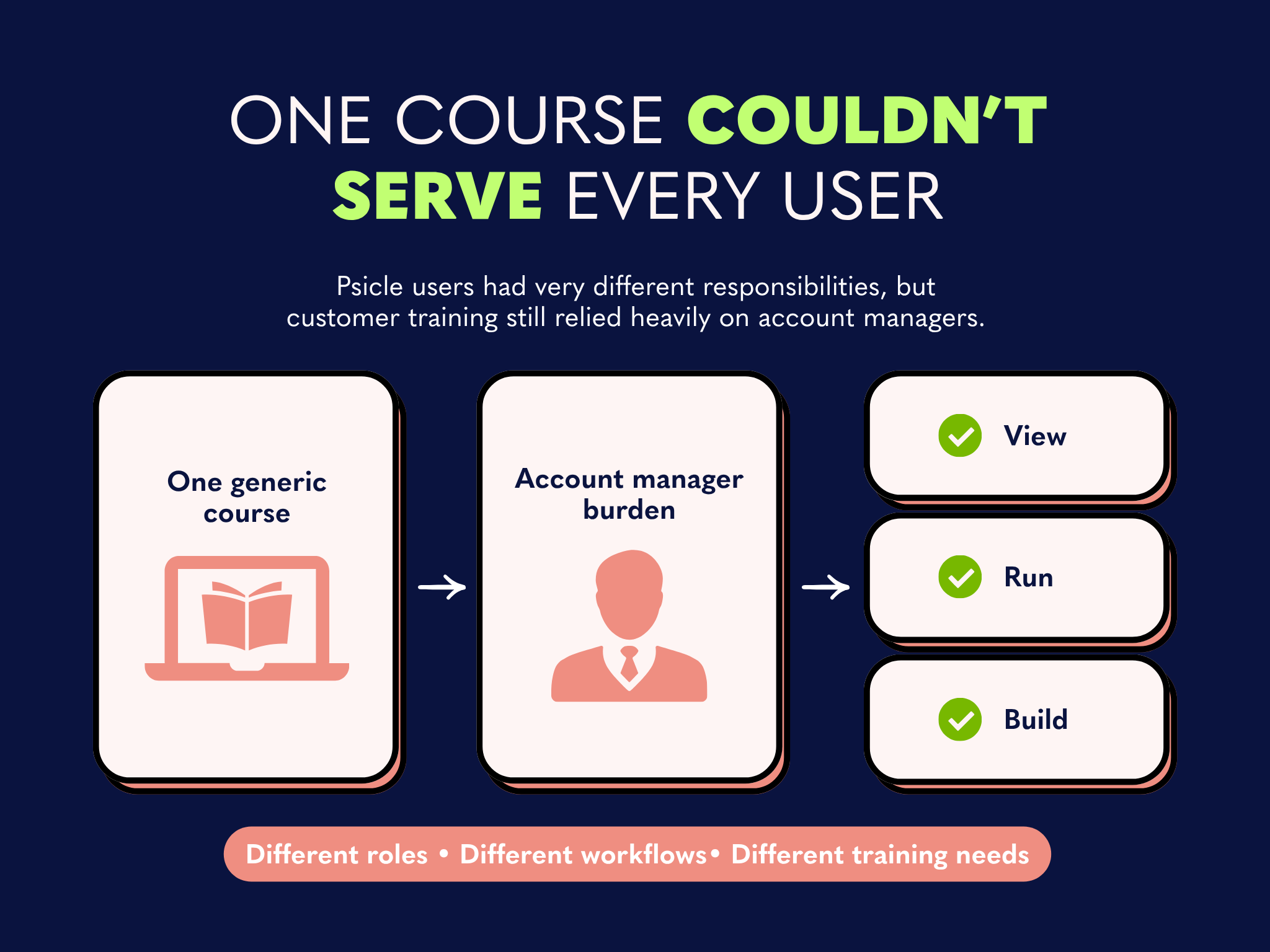
Psicle is used by people with very different responsibilities.
A senior user reviewing governance outputs does not need the same level of product training as someone building and running models regularly.
A single generic course would either give some users too much information or leave others without enough practical guidance.
Without a structured academy, much of the responsibility for helping customers understand the platform sat with Dynamo’s account managers.
The challenge was therefore bigger than writing training material. Dynamo needed a learning system organised around how customers actually used the software.
The source material was also highly specialised. We had to work with technical product knowledge while creating training that remained clear, practical, and engaging.
The Solution
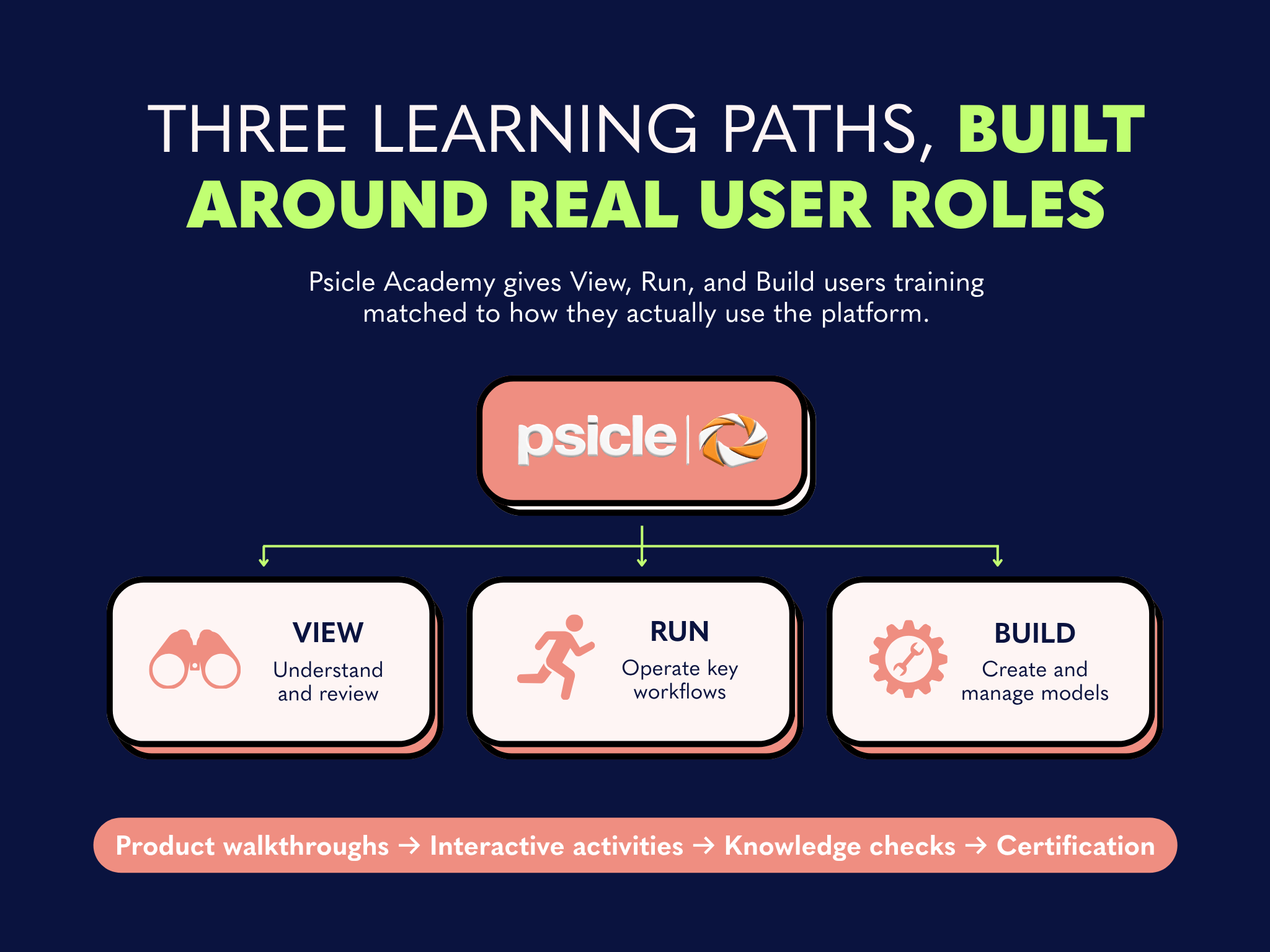
We structured Psicle Academy around three user types: View, Run, and Build.
Each path reflects the level of interaction that user has with the platform, allowing people to focus on the knowledge and workflows relevant to their role.
The course content was then built around practical use of Psicle rather than technical information in isolation.
We worked closely with Dynamo’s subject matter experts to understand the workflows learners needed to complete and translated that material into structured lessons, guided walkthroughs, and scenario-based knowledge checks.
Visual content played an important role too.
Animations, product visuals, and interactive activities help break detailed processes into more manageable parts while keeping the software itself central to the training.
We also developed a creative concept around cycling to give the academy a consistent identity.
The metaphor adapts according to the learner’s role. View users, for example, are positioned as the sports director observing the race rather than taking part directly. Course themes such as the pre-ride briefing and official race diary carry that idea through the experience without distracting from the learning.
Alongside the course modules, we helped shape the wider academy structure and certification journey so the training could support different stages of customer education.
The Results
Three role-based learning paths
View, Run, and Build give Psicle users training aligned with how they actually interact with the platform.
Certification-ready course content
The academy now has structured modules designed to support a wider certification journey rather than operating as a collection of standalone lessons.
“A breath of fresh air”
Dynamo’s internal response highlighted the difference between the academy and the more traditional training material familiar within the sector.
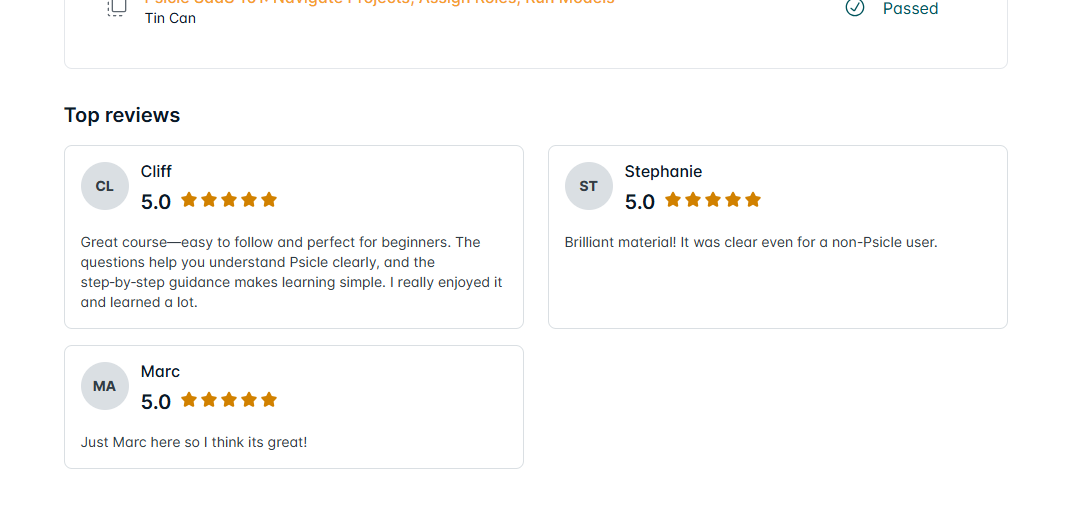
The strongest proof is the training system itself: structured around real users, grounded in product workflows, and built to make specialist SaaS education easier to follow.