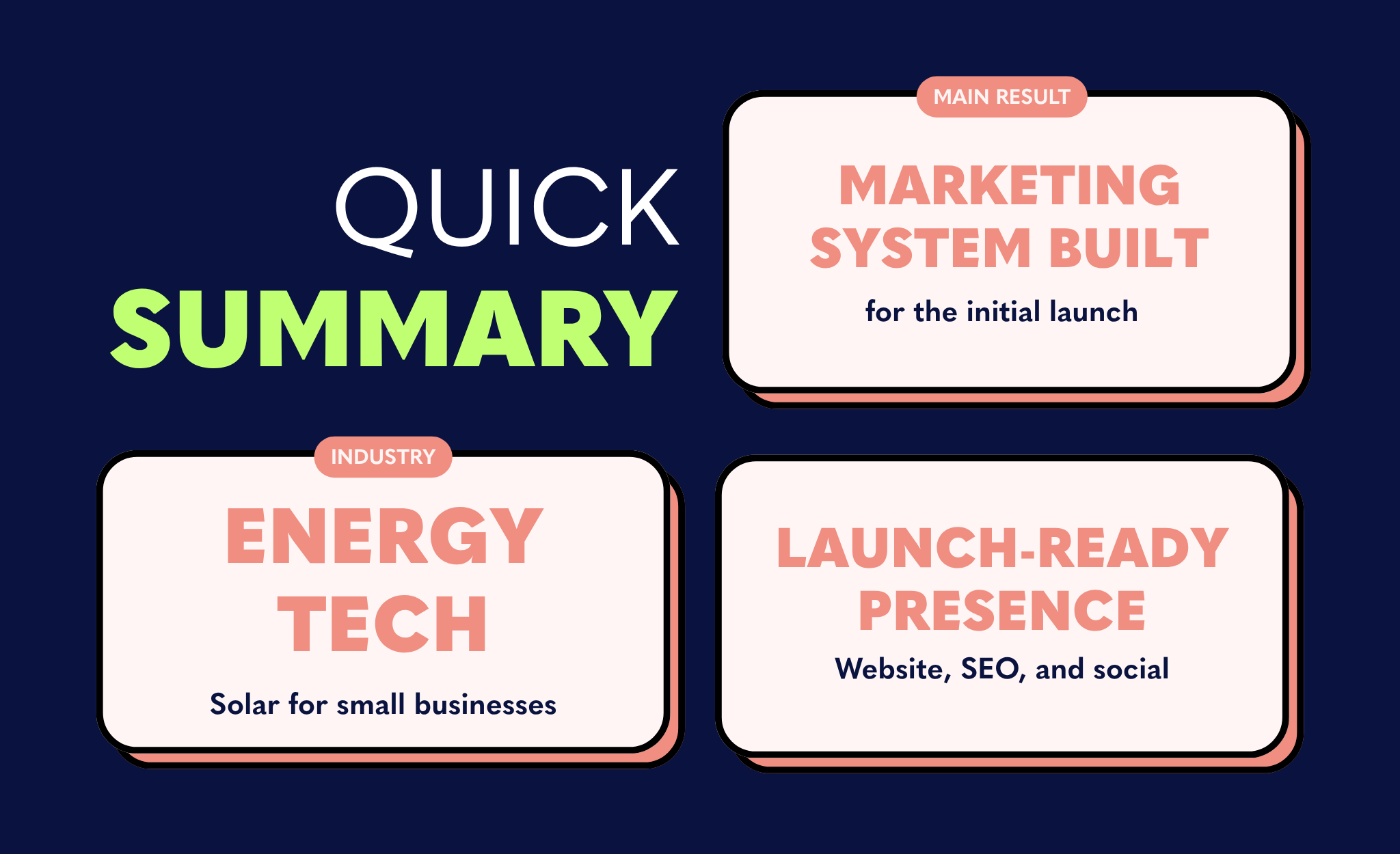
Launching a new business requires more than a strong product.
SolariHub was preparing to bring a new energy platform to market while the founder was focused on the wider priorities involved in building the business.
Marketing infrastructure had not yet been established.
The website did not explain the offer clearly enough, there was little supporting content around the brand, and there was no defined system for using search or social media to start building awareness and reaching potential customers.
We helped build that initial marketing foundation around the launch, covering positioning, five core website pages, SEO planning, Instagram strategy, and founder LinkedIn content direction.
The Problem
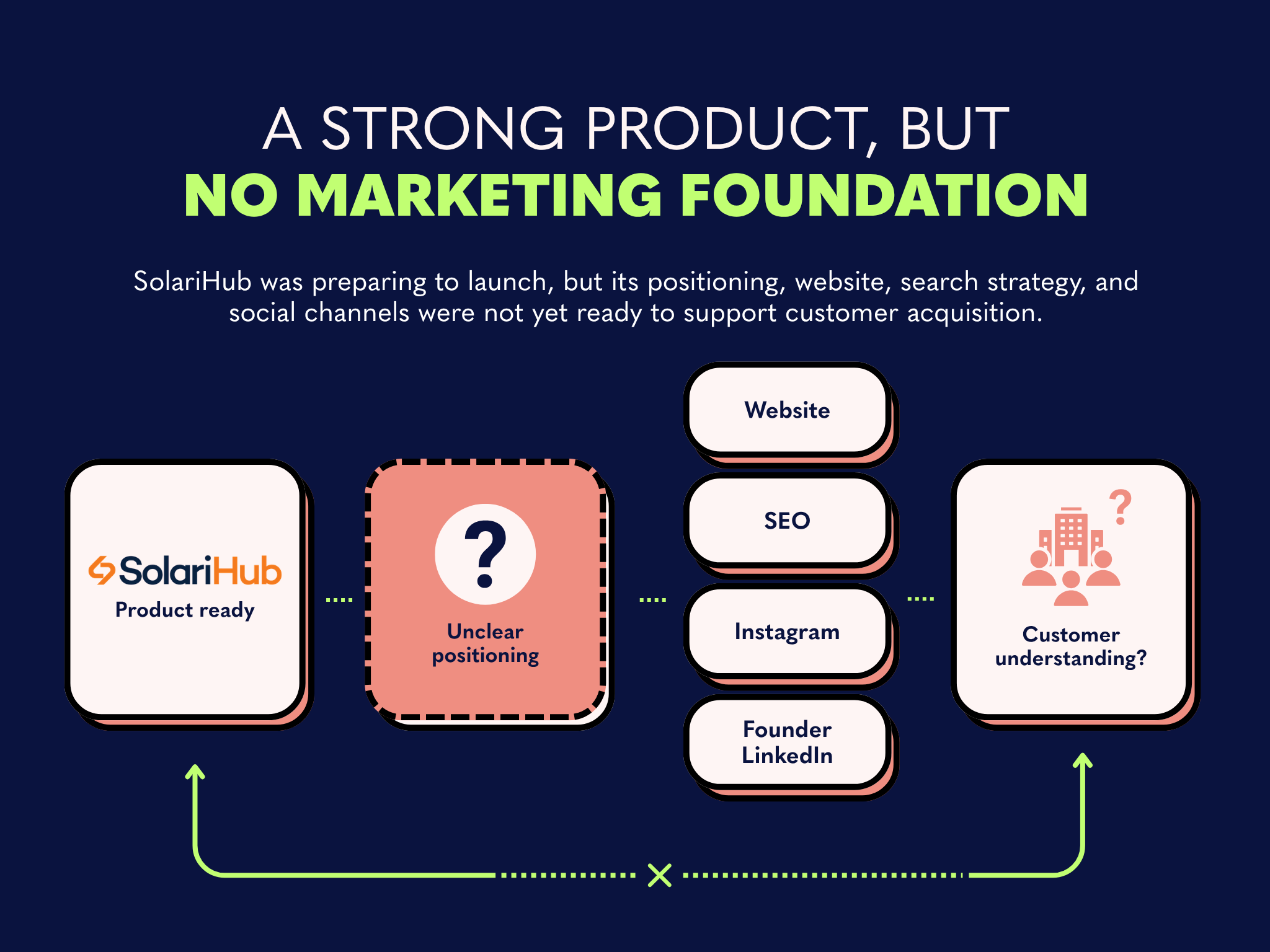
SolariHub needed to start attracting its first customers, but the business did not yet have the content system required to support that goal.
The product itself also needed clearer positioning.
SolariHub combines solar power with digital and financial tools for small businesses in Nigeria. There were several parts of the offer that could be communicated, which made it easy for the core value to become buried beneath product detail.
The early website reflected that problem.
Visitors needed to quickly understand the challenge SolariHub addressed, what the product offered, and how it could help their business.
The wider marketing setup was also still at an early stage.
Instagram did not yet have a defined content direction. The founder needed a clearer LinkedIn strategy. Search topics and future organic content had not been mapped into a structured plan.
With the founder concentrating on other parts of the launch, SolariHub needed someone to establish that initial system.
The Solution
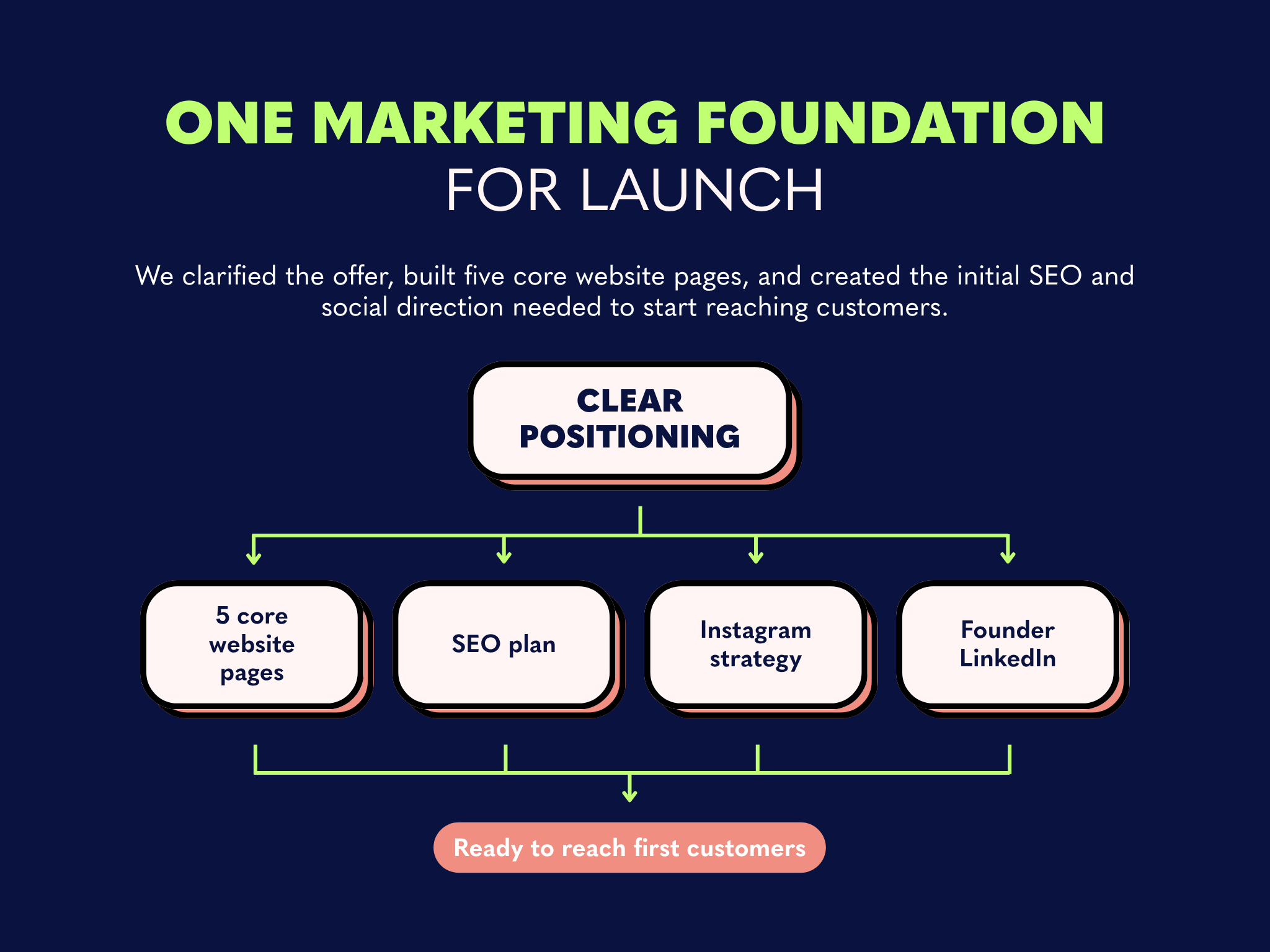
We started by making the product easier to understand.
Instead of giving every technical element equal weight, the messaging focused on business problems prospective customers already recognised, particularly unreliable electricity and the cost of depending on generators.
That created a clearer route into the wider offer.
The initial website scope covered five foundational pages:
Home
How It Works
Features / Solutions
About / Founder Story
Pricing
We developed the messaging and structure for those pages, alongside recommendations around hierarchy, page flow, and content placement for the website build. The original scope confirms these five pages were prioritised to improve clarity, credibility, and search readiness around launch.
The customer journey was organised around familiar business challenges before introducing the wider platform and how it worked.
We also created the initial SEO direction around topics relevant to solar power, reliable electricity, Nigerian businesses, and the problems the product was designed to address.
The marketing foundation extended beyond the website.
For Instagram, we planned content around the business problem, product awareness, solar reliability, and early brand building.
The founder LinkedIn strategy created a separate space for conversations around entrepreneurship, energy access, business challenges in Nigeria, and the thinking behind SolariHub.
Together, these channels gave the business a clearer structure for communicating after launch rather than relying on the website alone.
The Results
An initial marketing system ready for launch
SolariHub moved into launch with a clearer structure for its website, search content, Instagram, and founder LinkedIn presence.
The founder no longer had to start each marketing channel without an established direction.
Five foundational website pages
We developed the core pages needed to explain the product, customer problem, offer, and next steps more clearly.
A clearer customer-facing proposition
The website now leads with problems small businesses already understand before introducing the broader energy, digital, and financial model.
SEO and social foundations in place
SolariHub also has an initial organic content direction and defined roles for Instagram and founder LinkedIn.
SolariHub entered its launch with a clearer way to explain the product and an initial content system built to support the next stage of customer acquisition.